November 25 2025
Tags:
Share:
Brand guidelines are the reference manual for a brand and its language. They’re rich, often visually-striking documents that set out the key components of your identity: vision, mission, tone of voice, visual identity, application and implementation guidance. They’re used by everyone from brand experts to people writing internal documents or creating social posts, so they need to be clear, accessible and robust.
What to remember when designing brand guidelines
When a design team develops your guideline document they will (hopefully) have made sure it’s robust for different environments and applications. They will have put it under stress and challenged it, trying to find weak points and allowing time to correct the small details. They should be accessible for all types of users, user friendly and simple to navigate and apply.
Brand guides need to fit the people who use them – not the people who designed them. You know how the brand is used every day, the unfamiliar environments and paths the brand needs to navigate. The world in which the brand lives is constantly evolving and changing, and the guidelines need to be adaptable.
Keeping your brand guidelines running smoothly
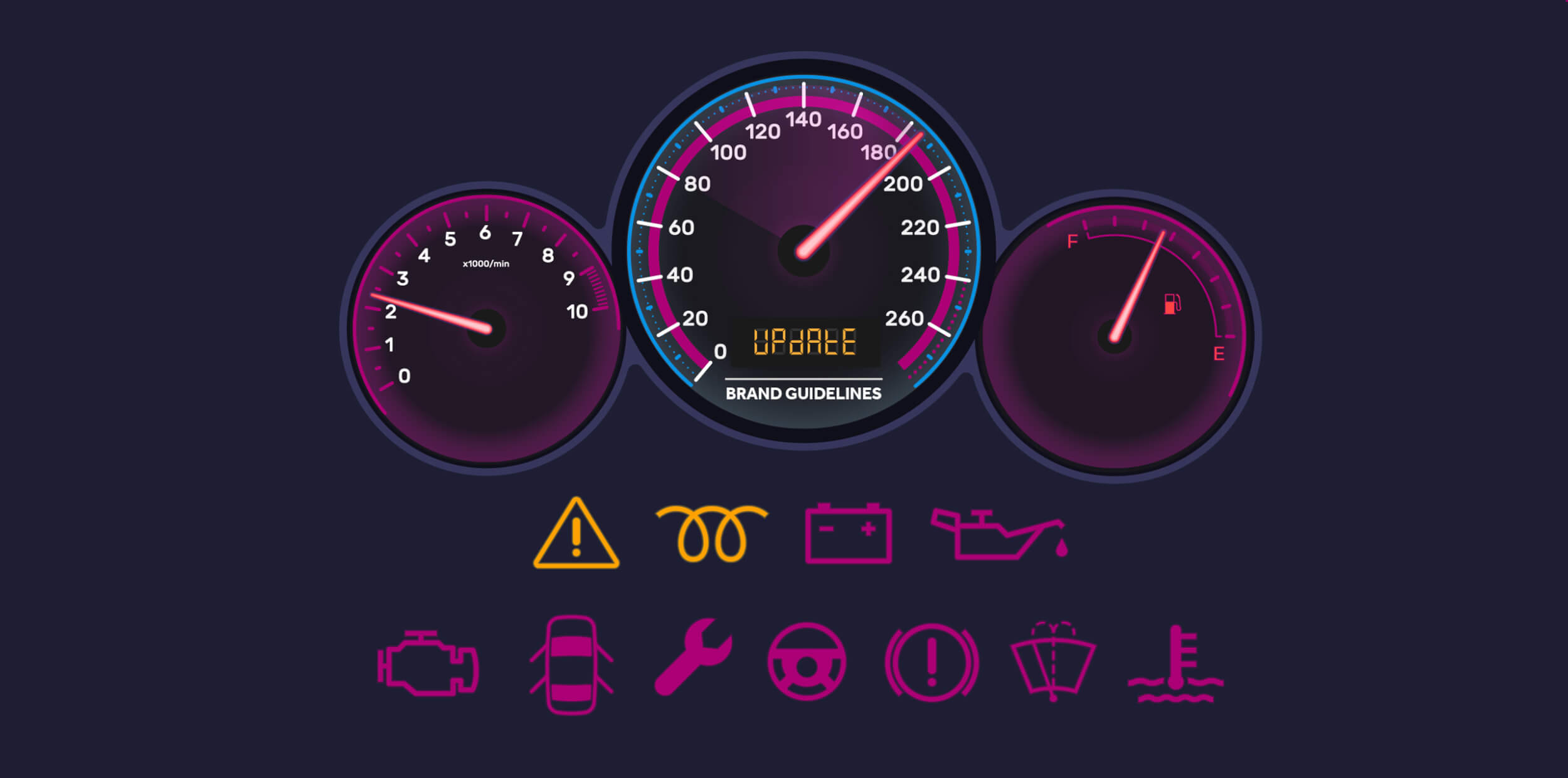
Even the best guidelines need regular check-ups. Like the engine of a vehicle, your brand performs best when it’s maintained and road-tested.
Once your new guidelines are launched, our recommendation is to build in a few planned pit stops. These checks help you spot what’s working well, and what the pressure points and metaphorical cornering might have highlighted. How are the tyres? Is it running a bit too hot or cold? Are you needing to make unusual manoeuvres or optimise the aerodynamics?
This might look like some elements in your guidance being underused, overused or misunderstood. Is the brand being implemented as intended? Is there confidence in execution? New channels or formats may mean extra guidance is needed.
Regular reviews help keep things oiled and consistent – identifying problems early and avoiding a rusty, labouring brand.
Suggested timeline:
Dashboard or control panel
Set up a simple way for users to share feedback as soon as they start using the brand. A shared document, channel or form can act as your diagnostic dashboard, helping you see patterns early on. Make it simple to ask questions, and listen carefully to the hum of the new brand engine!
1 month after launch
Everyone’s excited, but a little tentative. Hold an informal workshop so users can share examples of implementation and highlight any gaps – vital for consistency and familiarisation in the ‘running in’ period. It’s a chance to clarify, tune up and encourage experimentation and energy.
3 months after launch
By now, the brand is bedding in. Most agencies expect to refine guidelines at this stage, so gather feedback and review how things are running. Another informal workshop with a breadth of brand users or champions, together with the agency, is ideal. Identify what feels too restrictive or vague, and refine accordingly.
6 months after launch
Your brand will be really hitting its stride, gaining traction and brand awareness, and in use across most of its applications. This is the time for a quick audit to check usage, consistency, impact and flexibility. Keep your dashboard/control panel running to log concerns or grey areas.
12 months after launch
A year on, it’s time for a full MOT. Bring your brand users together to discuss how the identity has performed across a full cycle: campaigns, documentation, social media, events. Celebrate what’s working, and fine-tune the rest. Your regular pit stops should mean there are few surprises after a year round the track!
Beyond the first year
Brand MOTs are always useful, and they don’t have to mean a full rebrand. Small adjustments can make a big difference. Refreshing a colour palette, font, refining image styles or adding a new graphic device or set of patterns can revitalise your brand and improve efficiency without losing equity.
Regular care keeps your brand consistent, confident and ready for whatever’s next.
If you’re not sure where to start, we can help. We love new challenges – get in touch and we can have a chat about what you need.